Dear Alumni, Donors, Colleagues and Friends,
On behalf of Ceiba, I hope you enjoy reading our year-end newsletter summarizing our conservation progress in Ecuador during 2021. We are so very grateful to you, and to all our supporters that make this work possible.
Thank You, and Happy Solstice!
Catherine Woodward & Joe Meisel
Co-Founders
|
|
|
|
|
Every Drop Counts: Conserving Forest and Water on Ecuador's Coast |
|
|---|
|
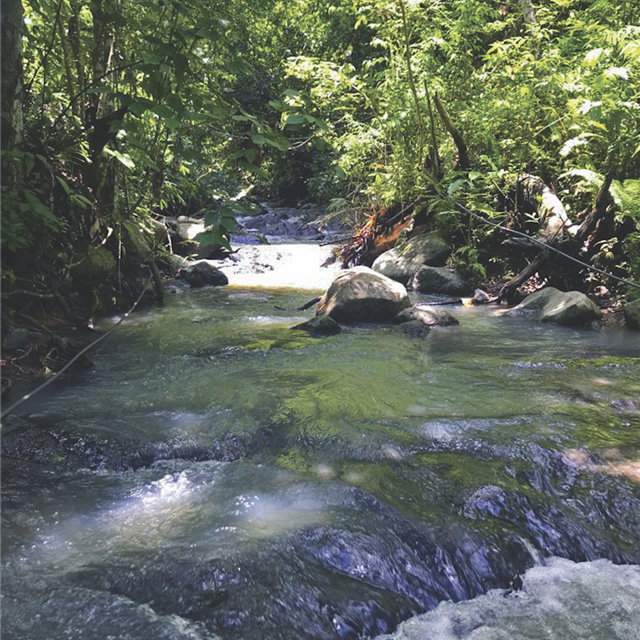
Water is essential to life. It sustains agriculture, forests, wildlife, and people. That’s why protecting fresh water is at the heart of Ceiba’s conservation efforts on the coast of Ecuador. Cut off from the Andes’ mighty rivers, the region experiences a long dry season when wells and rivers run dry and water must be trucked in from afar. This situation is both a challenge and an opportunity. Every acre of forest protected benefits native wildlife, but also the economy of rural households. Every mile of riverway reforested delivers more water to communities downstream. Every pasture planted with moisture-retaining trees means better well-water. And where deforestation and climate change are making summer droughts harsher, every drop counts.
Last year we established a half-million acre Conservation and Sustainable Use Area (ACUS, in Spanish) that embraces protection of forests and rivers. Thanks to a US Fish & Wildlife Service grant, we are negotiating to protect Reserva La Paz, and the forests of Cerro Seco within the ACUS. We have been humbled by the outpouring of support during the pandemic. Despite economic uncertainty, our donors understand that conservation cannot happen without commitment. From sustaining the Tiputini Biodiversity Station in the heart of the Amazon to ensuring the Lalo Loor Reserve weathered the pandemic, Ceiba’s accomplishments in 2021 relied on the generosity of our donors, whether they gave a few dollars or a few thousand. Every drop counts.
|
|
|---|
|
|
Hard Work Pays Off for Conservation |
|
|---|
|
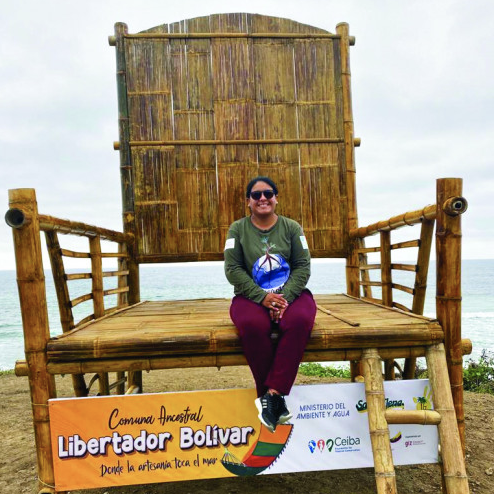
Carolina Toapanta has strived for years to raise international awareness of Ecuador's unique coastal region, and her steady commitment paid off when the United Nation’s REDD+ program (REducing Deforestation and Degradation) placed Manabí Province on its priority list. Both moves were critical to unlocking $700,000 that will flow from international agencies directly to these cash-strapped rural counties, helping them finance their own sustainable development and forest protection goals.
|
|
|---|
|
Not Sitting Still: Big Commitments to Small Communities
|
|
|---|
|
In keeping with Ceiba’s vision of people and biodiversity thriving together, we are expanding our commitment to support sustainable business ventures in communities on Ecuador’s wild coast. This unique region may be lacking in monetary wealth, but its people are rich with creative ideas that highlight the biological and cultural treasures of the area. To date, we have led sustainable agriculture training seminars for more than 80 landowners and 400 local students within the ACUS. And in 2021 Ceiba organized a wide range of community economic projects with support from the German Agency for International Cooperation and the UN Development Programme.
|
|
|---|
|
|
|
Everyone Deserves a Second Chance |
|
|---|
|
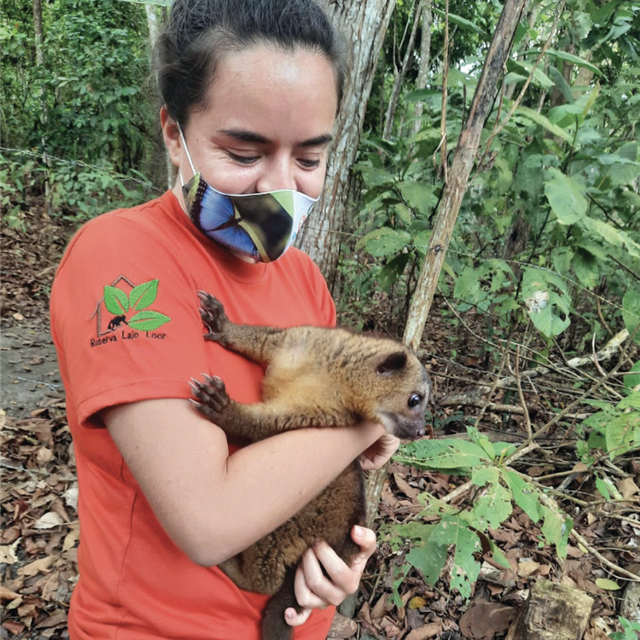
I never imagined that working at the Lalo Loor Reserve would give me the opportunity to bring animals back to this magical forest. When wildlife officers confiscate illegal pets, they sometimes release them in our forest where they get a second chance at life. During the past year we have freed boa constrictors, jaguar turtles, a sloth, an agouti, and even a kinkajou. Kinkajous live in trees and search by night for palm fruits and other foods. Locally they are called Cusumbo, so we named him Cusu!
|
|
|---|
|
The Most Biodiverse
Place on Earth |
|
|---|
|
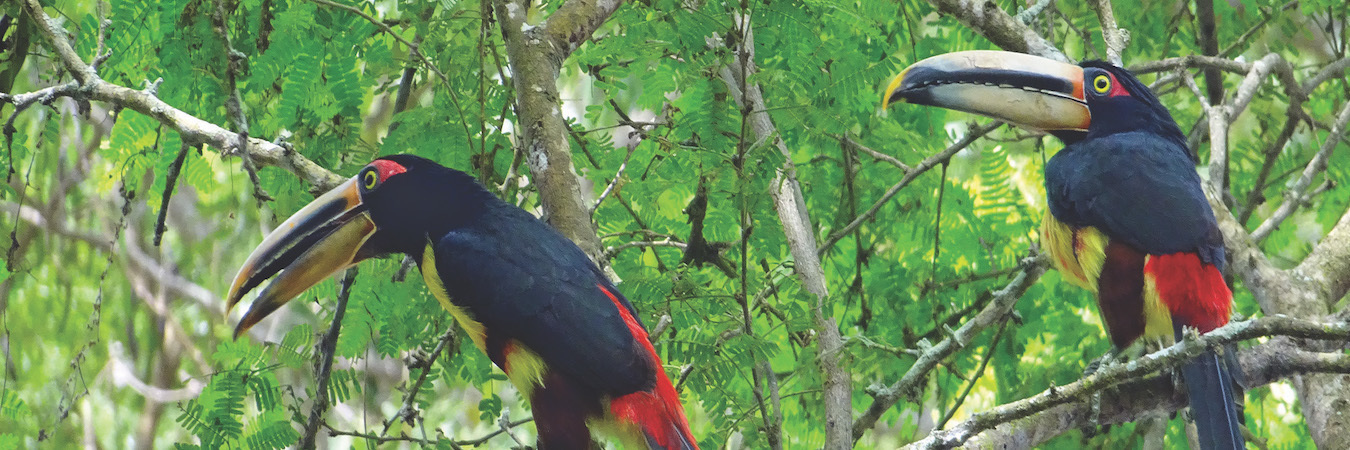
Lying on the Amazon’s western edge is the most biodiverse place on Earth, and Ceiba is proud to play a role in saving it. The Tiputini Biodiversity Station protects 1500 acres of pristine tropical rainforest, home to thousands of unique species, all nestled in the million-plus acre Yasuní Biosphere Reserve. Station staff and National Park Service guards control poaching and illegal logging, patrolling forest trails and the many rivers that are born here. But the pandemic threatened to shutter Tiputini by halting visits from researchers and students. In response, Ceiba partnered with Tiputini to raise life-saving funds from our combined supporters. Donors extended vital support, enabling Tiputini to survive the toughest months and return to their celebrated research and conservation programs.
|
|
|---|
|
|
|
|---|
|
|
Conservation Easement to the Rescue
Luis Lopez was in debt to the wrong people. On the coast of Ecuador, unscrupulous syndicates known as chulqueros had loaned Mr. Lopez money for his land taxes, but they extracted a heavy price: put up your forest as collateral. Over 1000 acres of pristine coastal dry forest, his land links Machalilla National Park to a network of Private Protected Forests and provides invaluable carbon-sequestration and water provisioning services. When default loomed, and the chulqueros were poised to seize his land, Mr. Lopez turned to Ceiba for help. We offered to create a new forest reserve through a long-term conservation easement, our third in Ecuador. Our supporters rose to the occasion, helping raise funds to settle the debt, and establish Reserva La Paz. Today the forest is safe, and protects dozens of unique and threatened species including regal icons like the giant King Vulture.
|
|
Coastal Kids Get Wet And Dirty |
|
|---|
|
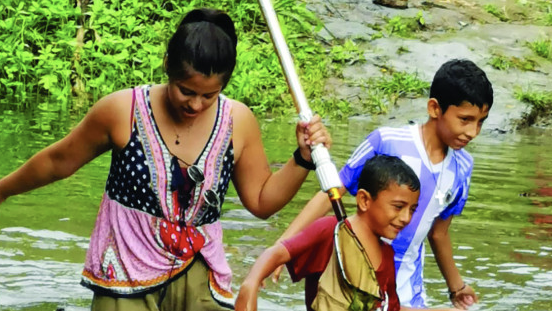
In filmmaking there is an old expression, “never work with kids or animals.” Well, at Ceiba we happily do both! For years, we have collaborated with A Mano Manaba, a group dedicated to enhancing the education of local school kids on Ecuador’s coast. Their name means “A Hand to Manabí,” the province where the Lalo Loor Reserve and the new ACUS (see page 2) are found. Every year our staff and countless volunteers work in and around the reserve to inspire the coast’s next generation to study and appreciate the value of nature. Together, we have challenged kids to measure reforestation trees, track howler monkeys, clean up beaches, and sample insects in local streams. Nobody loves wading rivers and sliding in mud more than kids, but luckily, so do our volunteers!
|
|
|---|
|
School Is Back In Session
In March 2020, the University of Wisconsin recalled all students on Ceiba’s Tropical Conservation Semester in Ecuador. Since then we wondered whether we’d ever return to a “normal” that included study abroad. But we are happy to announce that Wisconsin, and our Ecuadorian partners at the Universidad San Francisco de Quito, have given the green light to our flagship semester program. In January 2022 we will return, with a full complement of students, to explore the Amazon rainforest, Galapagos Islands, Andes mountains, and Ceiba’s reserves and conservation projects. After nearly two years of learning online, from home, many students cited their desire to interact face-to-face with like-minded peers as their main motivation for studying abroad. With them, we will be bringing much-needed income to tourism operators, Spanish instructors, research station staff, boat crews, and so many more Ecuadorians who rely on visits by groups like ours. You can join us in the Galapagos! |
|
|---|
|
Hasta Luego from Yasi Rezai
When I first learned about the Ceiba Foundation, I had no idea that it would have such an impact on me professionally and personally. It all started during a Master’s project in Ecuador with Carolina Toapanta. We worked in tandem on the early stages of a corridor project that would later become the ACUS, before I settled down as Administrator in the US office for many years. It has been a privilege to contribute to the numerous facets of Ceiba and to have become friends with such enthusiastic conservationists. The dedication of staff, donors, interns, volunteers, and all our collaborators has allowed us to accomplish so much, and we are still full speed ahead in the race to conserve biodiversity. Though I am leaving soon to pursue a full-time career in restoration of ecosystems here in the Midwest, I guarantee that I’ll be closely following Ceiba’s progress in Ecuador.
|
|
|
|
|
Bringing Diversity to Diversity
Events of last year prompted a heartfelt re-assessment of our commitment to racial justice. Ceiba resolved to offer scholarships for students of color, notably under-represented in study abroad, to enroll in our overseas programs. While we spend a lot of time studying plant and animal diversity, we realize it is just as important to focus on human diversity, and to make international opportunities available for everyone. The University of Wisconsin’s Botany Department stepped up, contributing $20,000 from their Humboldt Scholarship fund. A generous donor provided matching support, and Ceiba’s Diversity Scholarship was launched. Two students – of Asian and Mexican heritage – are the first recipients, and will attend the 2022 Tropical Conservation Semester. You can support future students on their own journey to experience the world’s diversity by contributing to the Diversity Scholarship at ceiba.org/donate
|
|
|---|
|
Your secure donation supports Ceiba in empowering communities to protect biodiversity, combat climate change, and promote the sustainable use of natural resources. Thank you. |
|
|---|
|
|
|
|
301 S. Bedford St., Suite 7A
Madison, WI 53703
608-230-5550
Ceiba is a 501(c)(3) non-profit organization. Your donation is tax-deductible. EIN 31-1565636 |
|
|---|
|
|
|
|---|
|
|
|
| |
|  |
|
|
|
|